Purity
Purity is a measurement, not an adjective.
Here is exactly what we test, what we accept, and what makes us reject a batch.
01 · Sourced
One crop, one region, one season. Each lot carries the name of the farm cluster it came from.
02 · Pressed or ground
Oils below 45°C in wooden ghanis. Spices on stone mills, in lots small enough to finish in a week.
03 · Tested
A NABL-accredited lab checks free fatty acid, peroxide value, adulterants, pesticide residue and microbial load.
04 · Sealed and numbered
Batch number on the label, report available on request. Nothing ships without a pass.
The panel
What every batch is checked for
A batch that fails any line does not get relabelled or sold cheaper. It goes back to the supplier and the season is written off.
Request a batch report- Free fatty acid
- ≤ 0.5%
- Peroxide value
- ≤ 5 meq/kg
- Argemone oil
- Absent
- Added colour
- Absent
- Pesticide residue
- Within FSSAI limits
- Total plate count
- Within FSSAI limits
Measures how fresh the pressing is.
Detects oxidation from heat or age.
The classic mustard oil adulterant.
No Sudan dyes, no lead chromate in chilli or turmeric.
Screened across 80+ compounds.
Confirms hygienic milling and packing.
How to check purity in your own kitchen
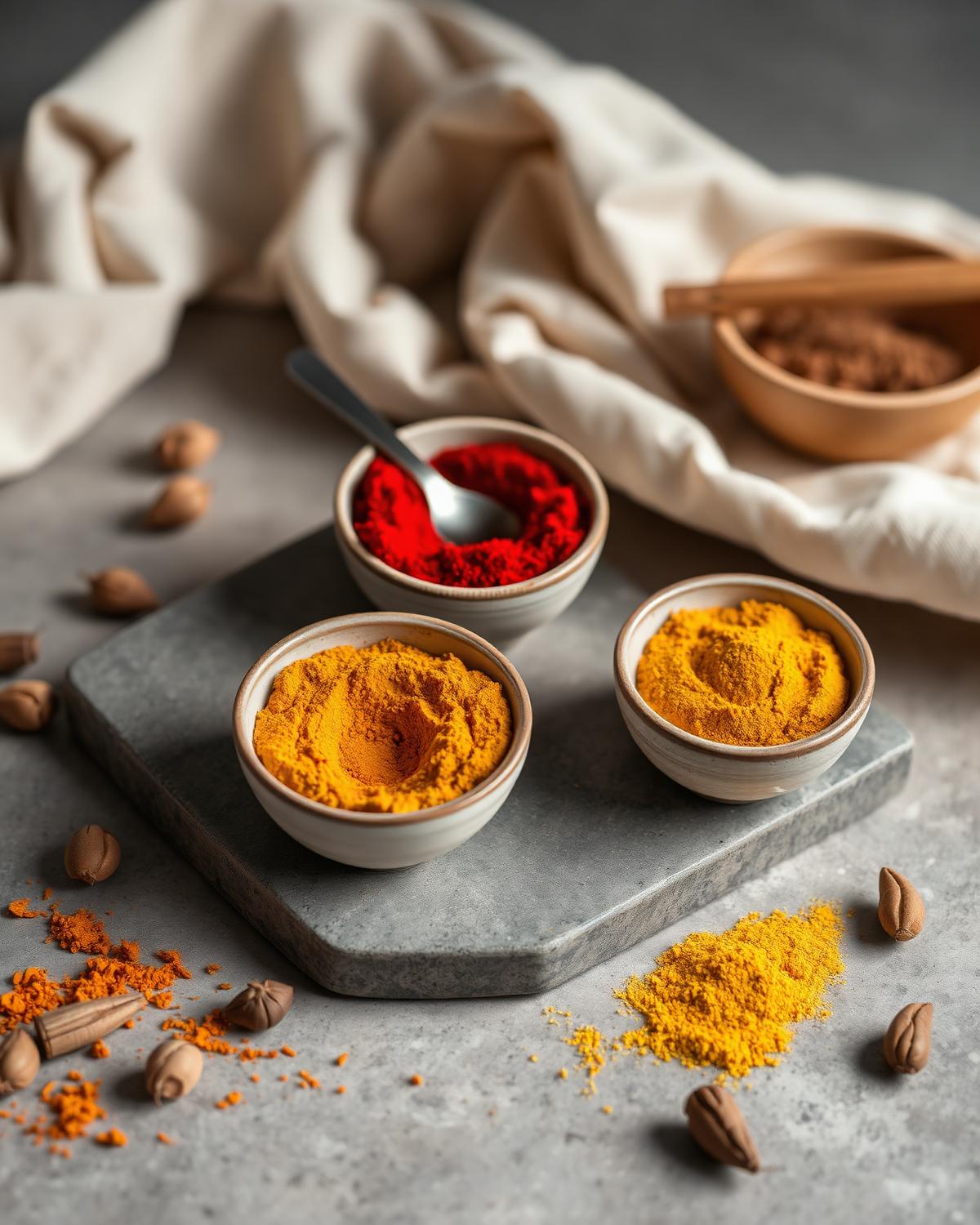
- Turmeric: stir half a spoon into warm water. Pure turmeric settles into a lemon-yellow cloud; dyed turmeric leaves a bright streak that stays.
- Chilli: sprinkle over water. Added colour bleeds red immediately, before the powder sinks.
- Mustard oil: refrigerate a spoonful. Adulterated oil separates or solidifies unevenly.